01 · Who's here

Working Document

The people and organisations working to make this data center happen

May 2026

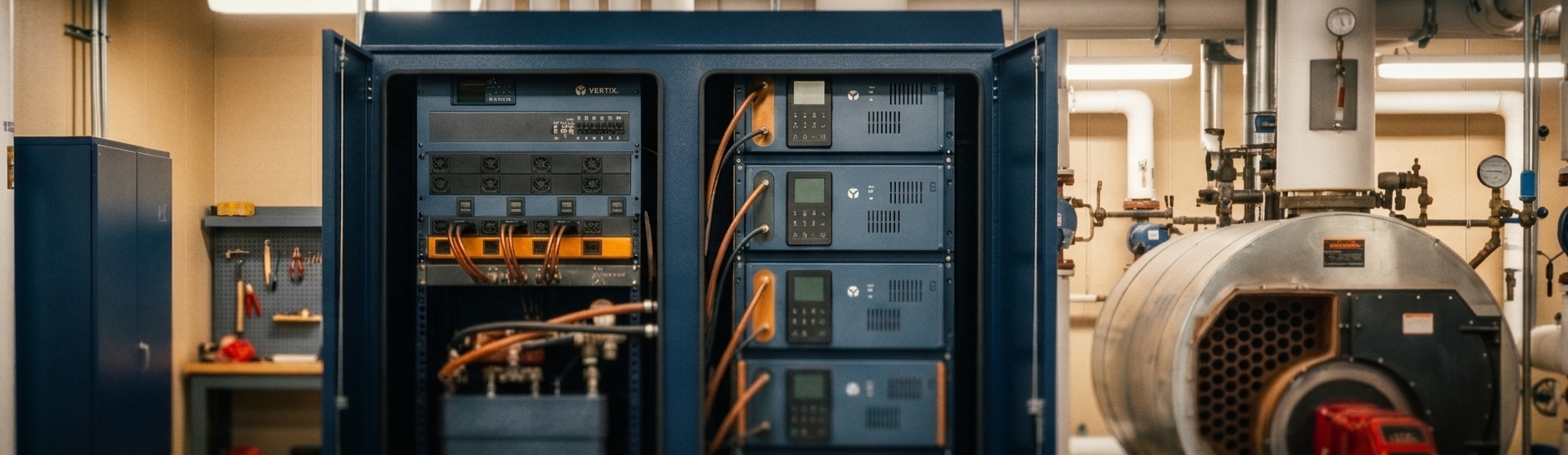
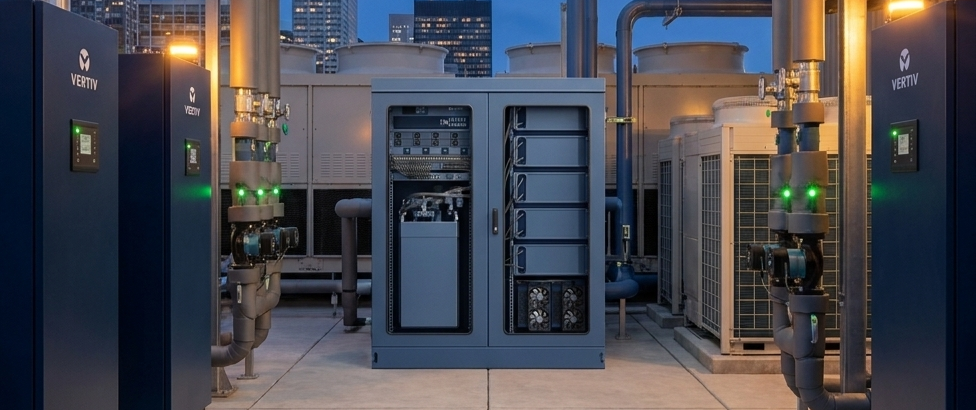
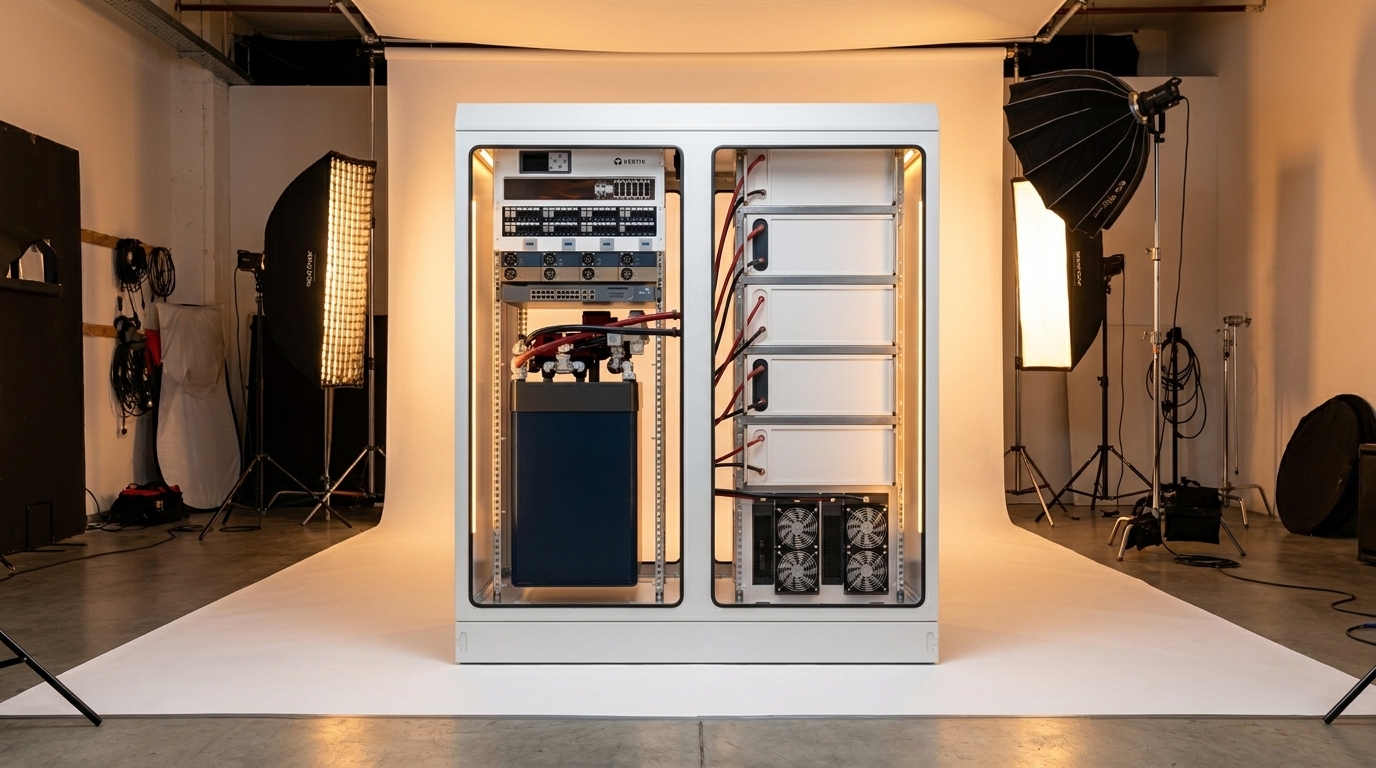
Industrial plant room with Vertiv power cabinet and boiler
MICROLINK DATA CENTERS
  • Nick SearraCEO and Co-Founder
  • Sancha OlivierCEO, Design
  • Shane PatherChief Technology Officer
  • Andrew ThomasChief Commercial Officer
  • David HasslerHead of Sales
  • Jeff SvedahlCEO, MicroLink Edge
  • Deniz AkgulCapital & Investment Advisor
PROJECT WORKING GROUP
  • Maddy Fairley-Wax, P.E.Jacobs
  • Mats ErikssonArctos Labs
  • Deborah S EgelandSage Oak AI
  • Joel CabreraCity of San José
  • Ryan BirdFuelCell Energy
KING COUNTY WASTEWATER TREATMENT DIVISION
  • Drew ThompsonResource Recovery Project Manager · Sewer Heat Recovery Program
  • Alejandro Davila-MirandaResource Recovery · Sewer Heat Recovery Program
UNIVERSITY OF WASHINGTON
  • David WoodsonExecutive Director, Campus Energy, Utilities & Operations
  • K.D. Chapman-SeeDirector, Capital Budget
  • Salone HabibuddinEnergy & Utilities
  • Victoria BukerReal Estate
  • Michael YoshidaCapital Asset Renewal
01 · Thesis

A data center in a glasshouse

From a heat-supply perspective, the envelope is solved. Setpoint 25 to 35 °C, low-grade water, year-round demand, predictable diurnal and seasonal profile.

The Venlo block is the current state of the art for protected horticulture. Glazing geometry, mass distribution, ventilation strategy, and underfloor heating circuits are all standardised. The setpoint runs 25 to 35 °C through the winter. The inlet temperature on the heating circuit is typically 35 to 50 °C, well within the range a hot-aisle return loop produces.

Around 15 percent of the natural-gas supply of the Netherlands flows into greenhouses every year to meet this demand. The number is worth pausing on. It says the heat load is not speculative, the matching temperature is not unusual, and the substitution is not exotic.

A MicroLink cabinet producing 10 to 20 MW of warm water year-round meets a small but real fraction of that demand if it sits in the right place with the right pipework. The glasshouse is the host envelope where four centuries of iteration have already pinned down every variable that matters.

MicroLink cabinet, doors open, in a glasshouse host environment. IMAGE · Hero San José RWF aerial, post-2022 cogen and dewatering builds, looking from north-west toward the bay. img-1-1
From the team

We have spent the last year working out where a data center sits most usefully in a city. The answer keeps coming back to the places that already need low-grade heat at a known temperature. A glasshouse is one of them. So is a wastewater digester, a brewery, a campus heating loop. We are building the first MicroLink site in Seattle to be useful to one of these hosts before it is anything else.

The MicroLink team · May 2026

MicroLink cabinet, doors open, in a glasshouse host environment.
MicroLink cabinet in a Venlo glasshouse · the host envelope for compute waste heat at 25 to 35 °C.
02 · MicroLink

MicroLink designs, builds, owns and operates data centers inside of industrial facilities.

01 Wastewater treatment

Server reject heat returns to anaerobic digesters at 35 to 38 °C. Biogas powers the load through molten carbonate fuel cells.

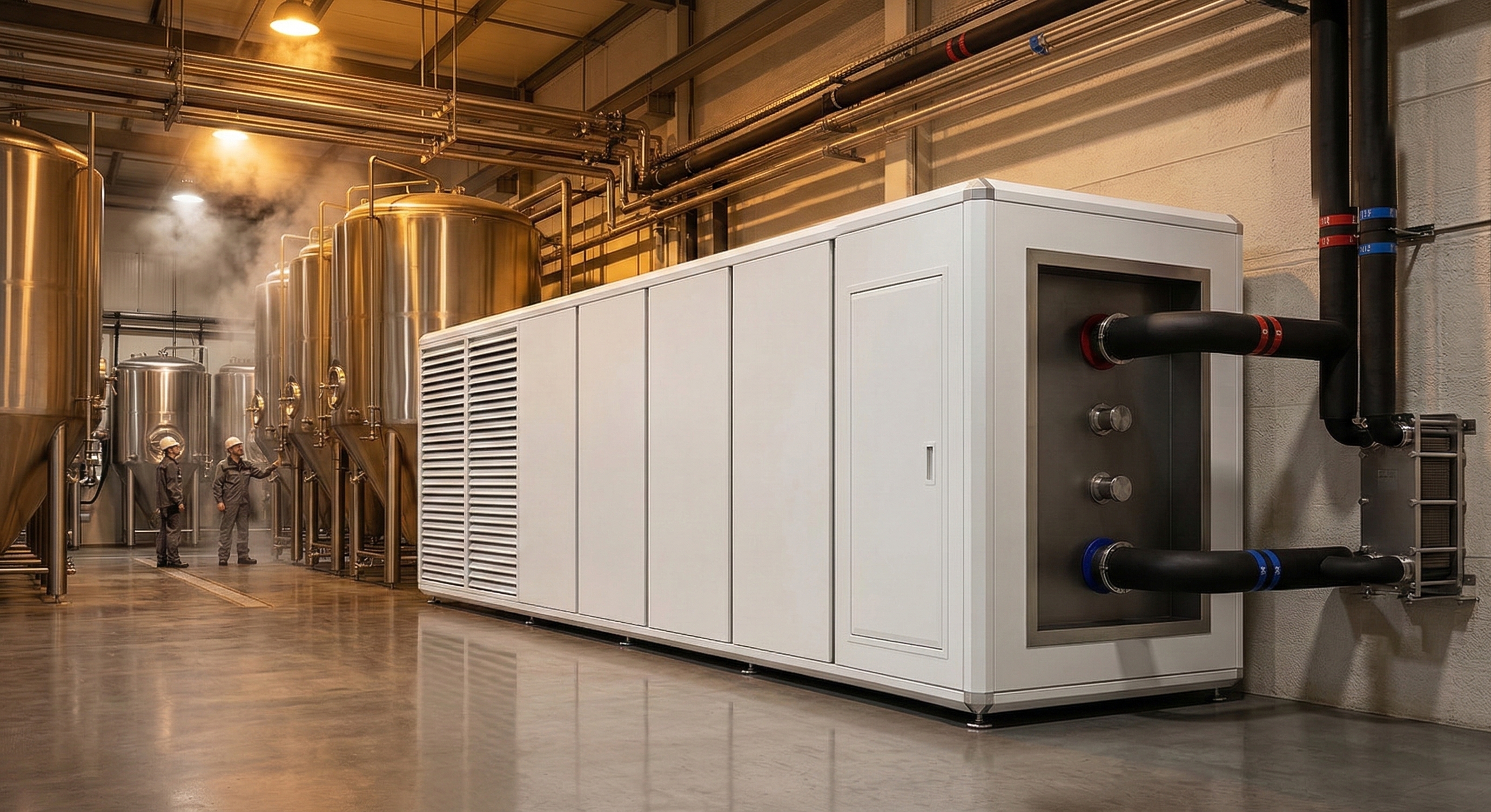
02 Breweries

Reject heat at 60 to 70 °C feeds wort heating and clean-in-place water as a baseload thermal source replacing steam.

03 Hotels and hospitality

Sub-MW edge pods deliver 60 °C water for laundry, kitchens, hot water, and pools. Gas displacement plus on-property compute.

04 Hospitals

Hospital-grade 24/7 baseload heat with the redundancy hospitals already have. Thermal resilience plus campus compute.

05 District heating

Direct feed of 65 °C water into a district network return loop. A year-round, weather-independent heat source.

06 Research campuses

University utility plants with district heating networks and on-site research compute demand. UW Seattle is canonical.

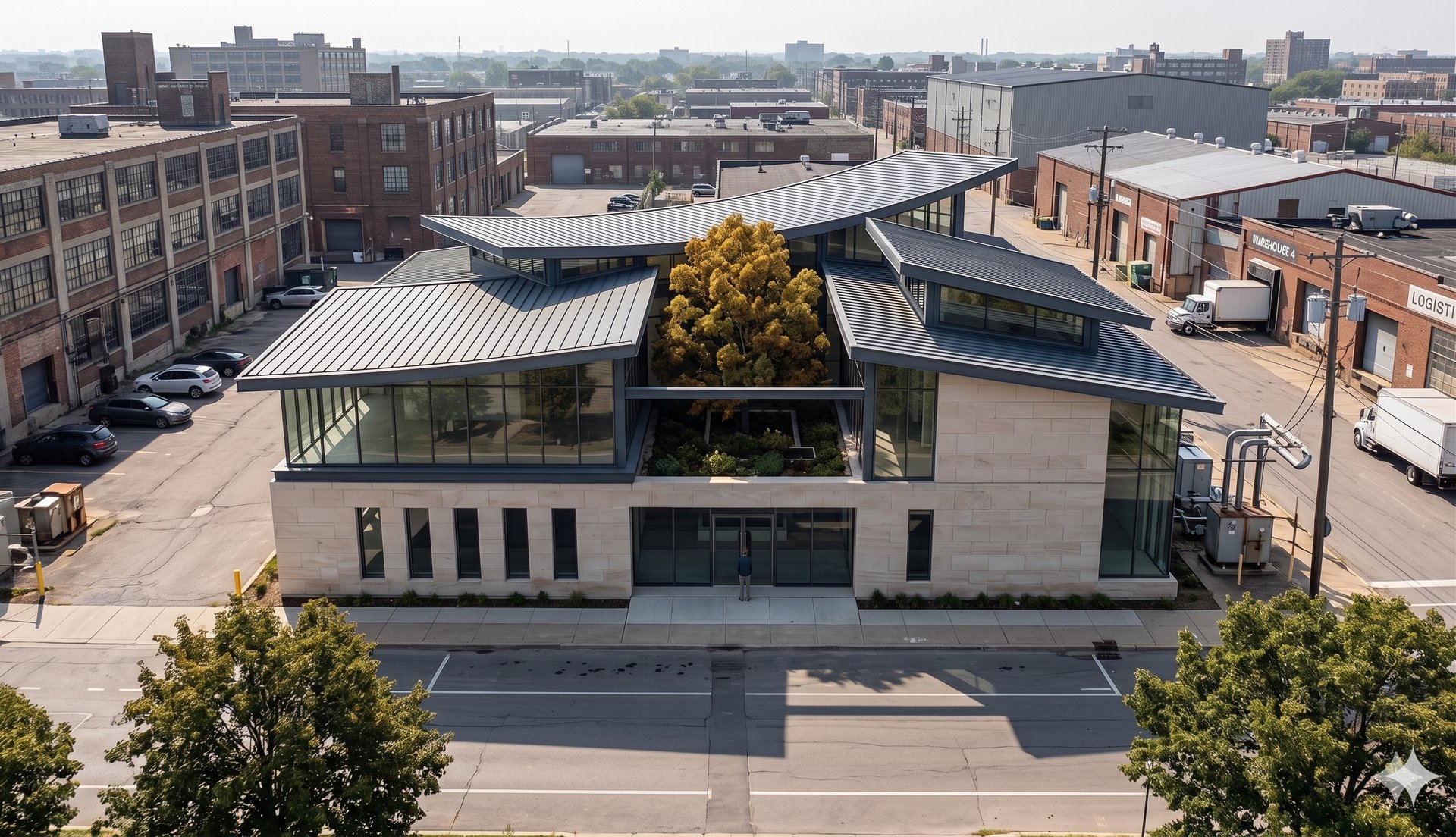
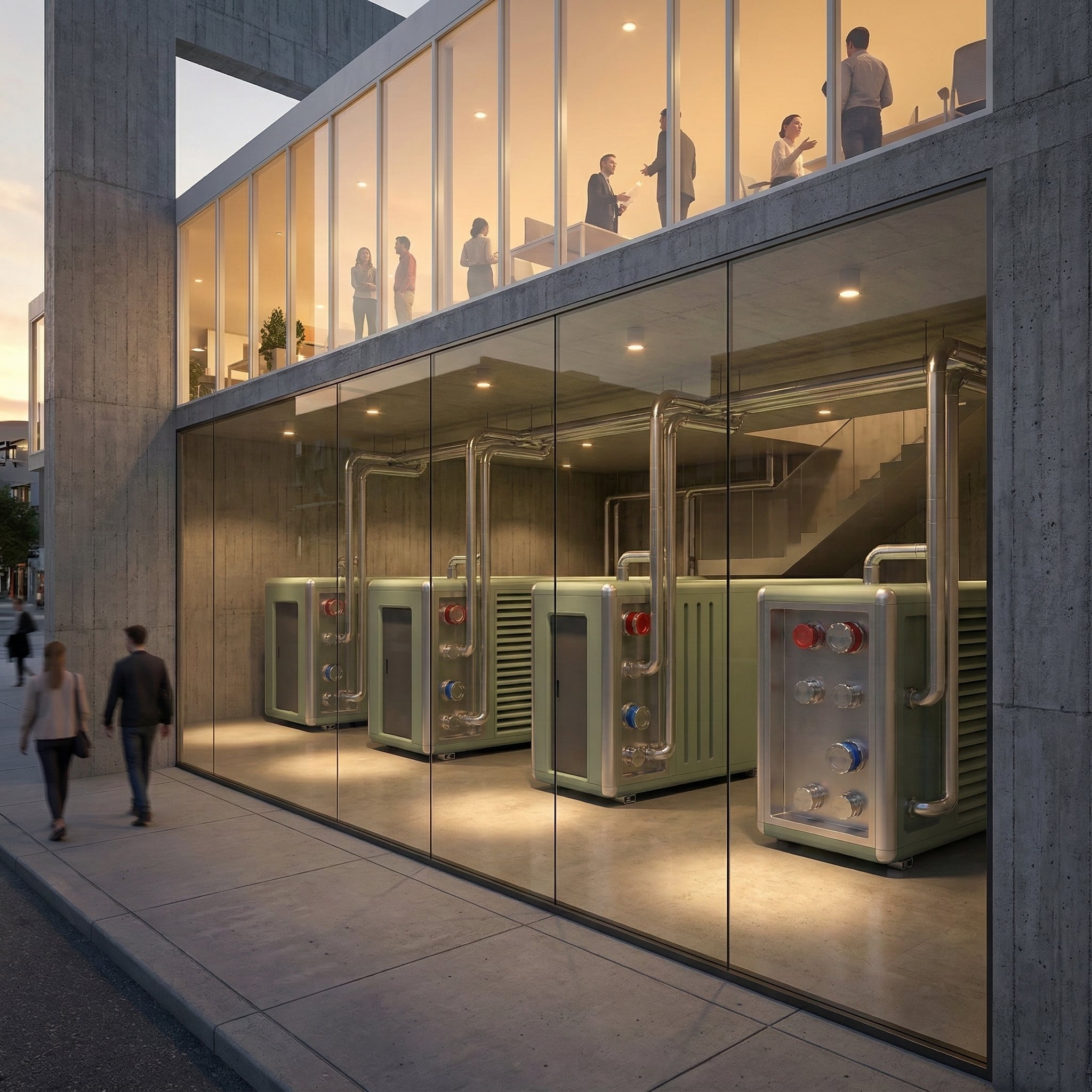
MicroLink glass-fronted facility, evening
The pods are modular, repeatable, upgradable. The buildings they live inside are not.
Service · 01

Distributed DC as a Service

Efficiency-driven compute, distributed close to where it's used. Liquid-cooled data centers on industrial host sites, with waste heat returned to the host process. Hosts contribute land and thermal offtake. Customers consume compute. The pods are modular, repeatable, upgradable.

I lived in Lagos for five years. Then Nairobi for five more. In 2001, if you weren't in the same room as someone in Nigeria, they were unreachable. No reliable post. No working landlines for most of the country.

Then GSM arrived. Half a million subscribers in 2001. Eighty million by 2010. Two hundred and twenty million today. Our current moment could be an even greater shift. It seems only right to ensure it's another good one.

Nick Searra
CEO and Co-Founder
Liquid-Cooled Colocation

02

High-density colocation.

GPU-as-a-Service

03

Managed NVIDIA clusters.

Inference-as-a-Service

04

Production model serving.

02.A · The portfolio · six projects, six host categories, one model
01 · Wastewater

San José and Santa Clara RWF · California

The city-owned regional wastewater facility, 11 km [7 mi] from NVIDIA HQ. Site identified, characterised, and shortlisted as the lead candidate for a sovereign municipal AI cloud deployment. NVIDIA engagement is opening across multiple channels, beginning with the project working group convened in May 2026.

WORKING DOC · MAY 2026
11 km · 7 mi TO NVIDIA HQ
5 → 15 MW PHASED
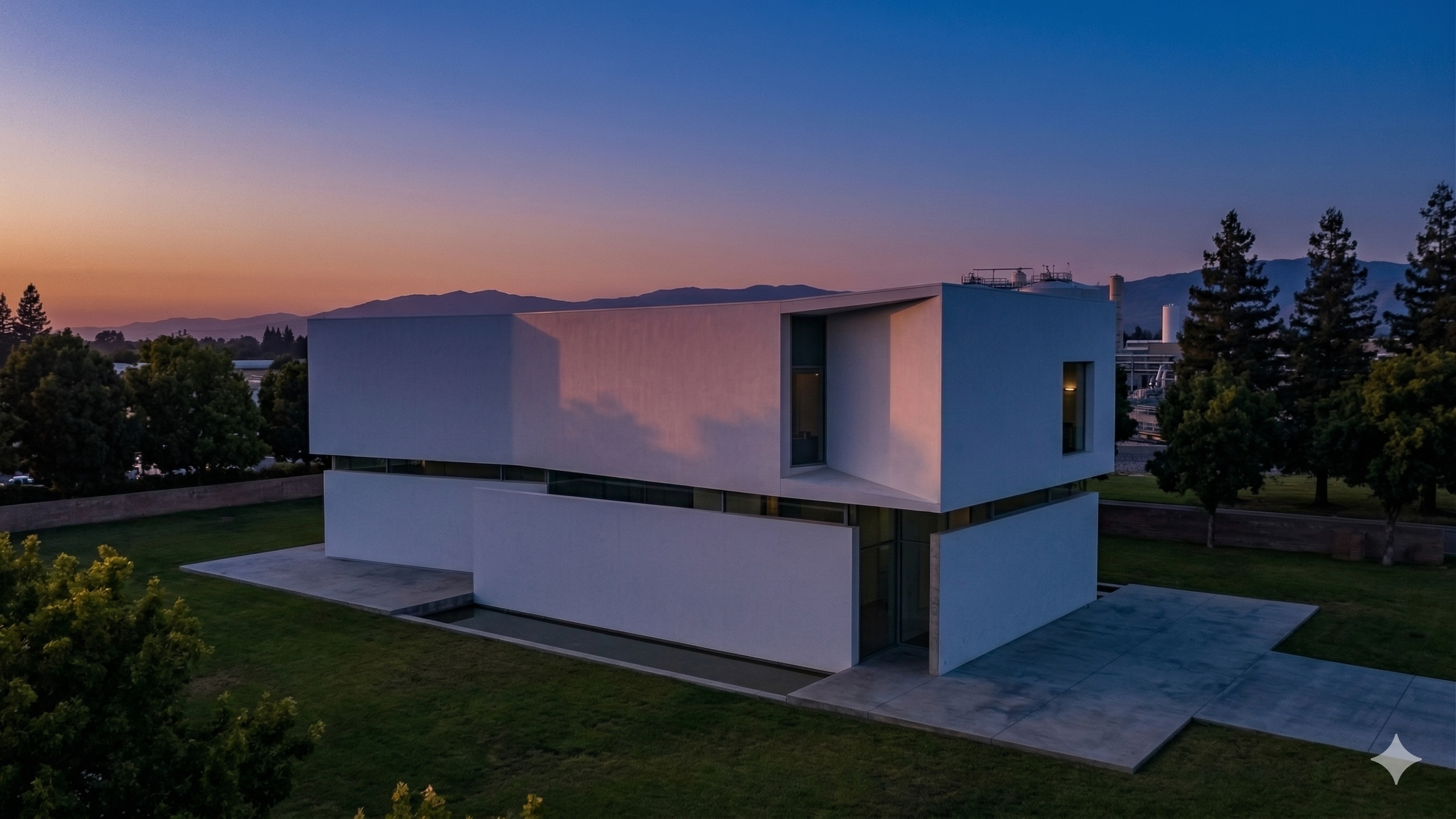
San José–Santa Clara Regional Wastewater Facility · MicroLink data center at golden hour, modular white architectural form against South Bay foothills
02 · Wastewater

MWRD Stickney · Chicago

The largest wastewater treatment plant in the world. Engagement spans five MWRD teams across multiple working sessions. MWRD requested a deployment proposal, which we delivered. Proposal currently under MWRD legal review. Site supports a multi-phase deployment from first phase through scale.

LARGEST WWTP GLOBALLY
45 MW PHASED
124 COMMUNITIES
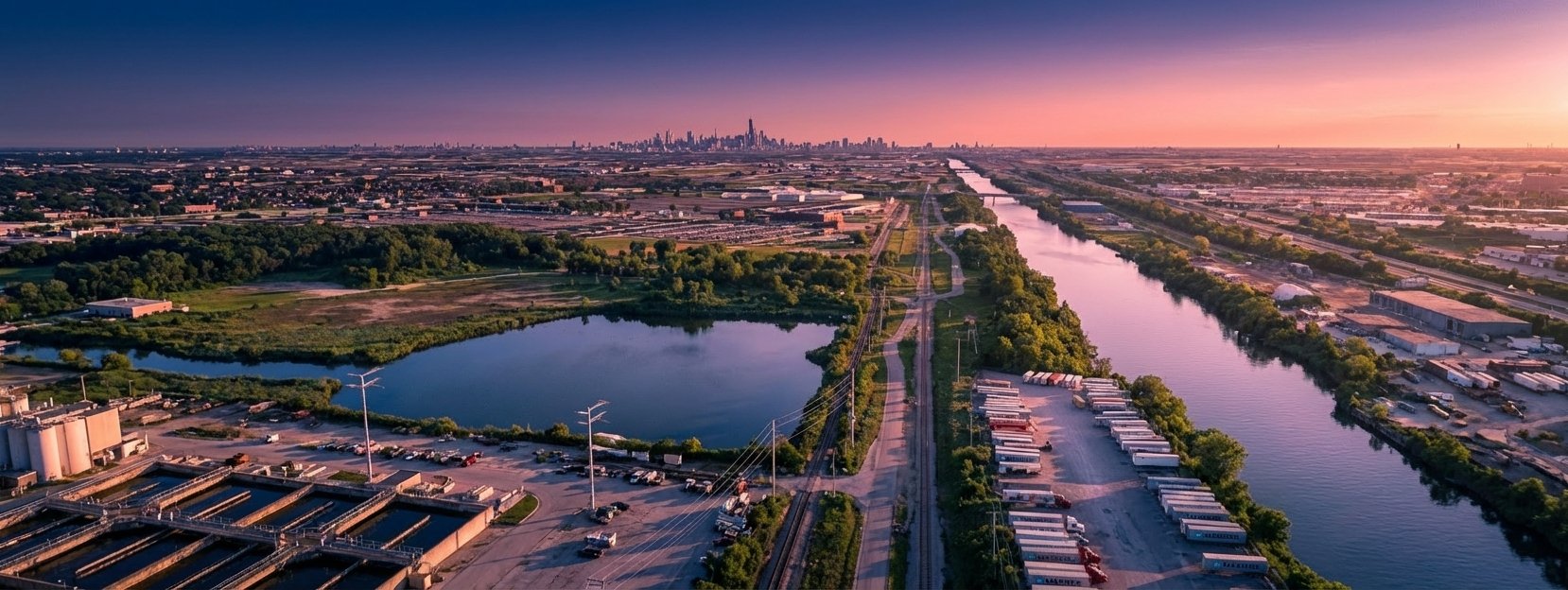
MWRD Stickney WWTP, aerial along the Sanitary and Ship Canal at sunset, Chicago skyline in distance
03 · Wastewater

Newtown Creek WRRF · Brooklyn, NYC

10 MW deployment integrating with the eight egg-shaped digesters that have made the site one of NYC's most photographed civic infrastructure landmarks. The first East Coast sovereign municipal AI candidate.

EIGHT DIGESTER EGGS
10 MW DEPLOYMENT
EAST COAST ANCHOR
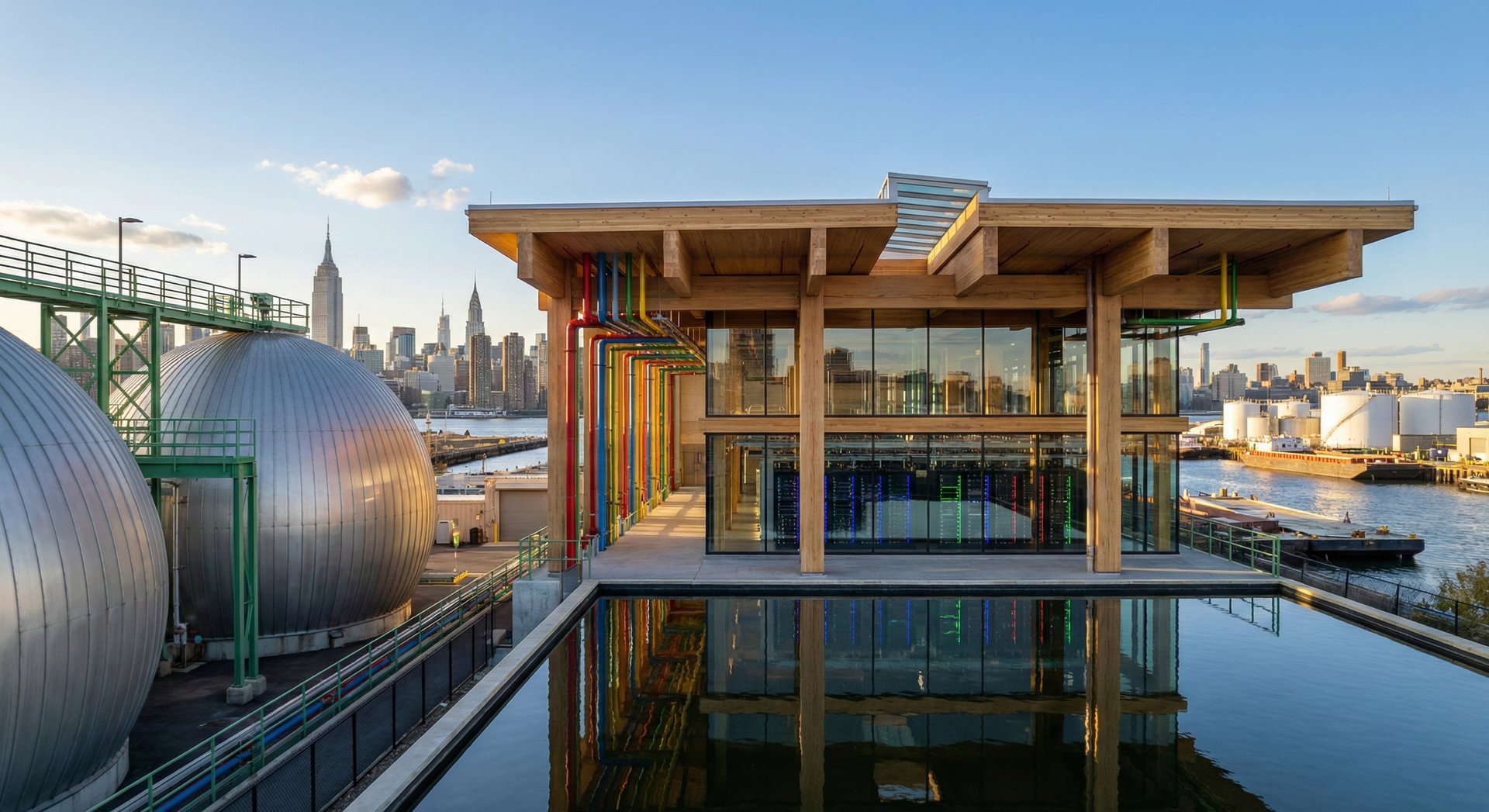
Newtown Creek WRRF, silver digester eggs and waterfront pavilion with Manhattan skyline in distance
04 · Brewery

Anheuser-Busch · St Louis

The largest beer production site in North America. Brewery as host category, with reject heat into wort and clean-in-place water as the deployment hypothesis. Initial engagement with the AB InBev technology team established the corporate-track framing. Pipeline qualification ongoing.

LARGEST US BREWERY
60–70 °C TO WORT
AB InBev TRACK
Anheuser-Busch brewery, St Louis · historic brick complex with twin smokestacks and clock tower
05 · District heating

University of Washington · Seattle

A pod at the West Campus Utility Plant Annex (P-4), tied into UW's Energy Renewal Plan. Phase 1 at 1 to 2 MW IT load, Phase 2 scaling to 3 to 5 MW. Reject heat at 65 °C feeds the new Primary Heating Water loop directly.

WCUP ANNEX P-4
1 → 5 MW PHASED
UW ENERGY RENEWAL
UW West Campus Utility Plant Annex · modern facility with curved zinc roofline in industrial setting
06 · Hospitality

Choice Hotels · 25-site pilot

A 25-site initial deployment scaling to 200 properties under Phase 2, structured as the MicroLink Edge SPV. Sub-MW pods per property using NVIDIA Jetson Orin and IGX at the host edge, federated back to regional cores at MicroLink WWTP and brewery sites.

25 → 200 PROPERTIES
SUB-MW PER POD
MicroLink EDGE SPV
MicroLink Edge SPV cabinet inside hotel mechanical room, full-context view with copper-piped thermal coupling and adjacent boiler
San José–Santa Clara Regional Wastewater Facility — clarifier basins and treatment cells

Eight zones of collaboration. Named participants on each one.

Currently active

These are the areas we are currently working on. Click here if you would like to add new areas to that.

Zone 01 · Build

Grid independence and heat recovery

Diesel-free 2N power topology. MCFC on biogas as prime, LFP for transient, PEM hydrogen for ramp. Server reject heat into host process loop. The closed thermodynamic loop.

NVIDIATBD
MicroLinkShane Pather
KING COUNTY WTDTBD
Explore further
Zone 02 · Build

Inter-pod and multi-site fabric

Quantum-X800 + AC SU at 576 GPUs, twin-plane fat tree. Spectrum-X for multi-tenant scale-out. Site-to-site federation via Spectrum-XGS. Edge-to-core hierarchy with Jetson at sub-MW host sites.

NVIDIATBD
MicroLinkShane Pather
ARCTOS LABSMats Eriksson
Explore further
Zone 03 · Build

Monitoring and control

DCGM, NVML, Mission Control at IT layer. Metropolis for building-as-managed-asset. Omniverse / DSX Blueprint for digital twin. Jetson / IGX Orin for facility-side control loops.

NVIDIATBD
MicroLinkShane Pather
ARCTOS LABSMats Eriksson
Explore further
Zone 04 · Build

Data center design

Liquid-cooled from day one. Sized for next-gen hardware envelopes (B300, Vera Rubin path). Architectural shell with civic intent. Co-developed reference architecture for the canonical pod.

NVIDIATBD
MicroLinkSancha Olivier
JACOBSTBD
Explore further
Zone 05 · Product

Sovereign public-sector AI

One of MicroLink's four product lines, alongside colocation, GPU-as-a-Service, and inference-as-a-Service. Confidential compute, multi-tenant isolation, per-tenant clusters, sovereign fine-tuning on local weights. Six public-sector customer segments.

NVIDIATBD
MicroLinkNick Searra
KING COUNTY WTDTBD
Explore further
Zone 06 · Product

Sustainability and climate reporting

Co-authored white paper. ERF, WUE, CUE, PUE published metrics. EU EED 2027 waste-heat compliance. California SB 253 / SB 261 / AB 1305. Net Grid Energy Position. ISO 14064-3 third-party assured.

NVIDIATBD
MicroLinkShane Pather
SAGE OAK AIDeborah S Egeland
Explore further
Zone 07 · Contributions

Open-source contributions

Heat-coupled control loop to LF Energy. FacIT semantic conventions to OpenTelemetry. DSX Max-P module co-developed. OCP liquid-cooling spec. Thermal Lab dataset. Apache 2.0 default.

NVIDIATBD
MicroLinkShane Pather
MICROLINKSancha Olivier
Explore further
Zone 08 · Contributions

Workforce and ecosystem

University of Washington AI Infrastructure Apprenticeship with NVIDIA DLI. NCA-AII entry, NCP-AIO exit. Three sub-tracks: liquid cooling, fuel cell, AI infrastructure operator. Inception startup hosting at preferential rates.

NVIDIATBD
MicroLinkJeff Svedahl
MICROLINKAndrew Thomas
Explore further
Energy balance 2 of 4
Design · Energy balance

San José energy balance, today and post-ADFU

The case for MicroLink at San José is not heat supply gap-filling. The plant has more cogen heat available than it needs. The case is thermal substitution: MicroLink absorbs the low-grade duty currently met by cogen, freeing high-grade cogen capacity for the new MHP module and freeing the post-upgrade biogas surplus for monetisation.

TodayPost-2022 cogen, pre-ADFU
Plant electrical demand~11 MW
Cogen output11–14 MW
Cogen recoverable thermal17–19 MW
Plant thermal demand5–7 MW
Heat rejected to atmosphere8–12 MW
Biogas production50,000–65,000 m³/d
Biogas energy600–900 MMBtu/d
Post-ADFU + MicroLink2028–2029
Plant electrical demand12–13 MW
Cogen output14 MW nameplate
Cogen recoverable thermal17–19 MW
Plant thermal demand7–9 MW
Heat rejected to atmosphere→ 0 MW (absorbed by MicroLink)
Biogas production85,000–120,000 m³/d
MCFC electricity (BTM)2.3 MW (FuelCell SureSource 3000)
MCFC thermal output1.8 MW
H₂ capability (tri-gen)up to 1,200 kg/day
Net grid draw at 10 MW IT8.9 MW (−21%)
CO₂ avoided11,750 tCO₂e / year

Two simultaneous shifts. First, biogas production increases by 60 to 80 percent through the combined MHP uplift and FOG co-digestion. Second, plant thermal demand increases only modestly because the new MHP module concentrates duty at 75 °C, not at the mesophilic temperature where most of the existing demand sits.

The combined effect: a substantial biogas surplus the existing 14-megawatt cogen cannot consume at full duty cycle, paired with a heat-rejection problem that has not improved. Both are resolved by a colocated thermal partner.

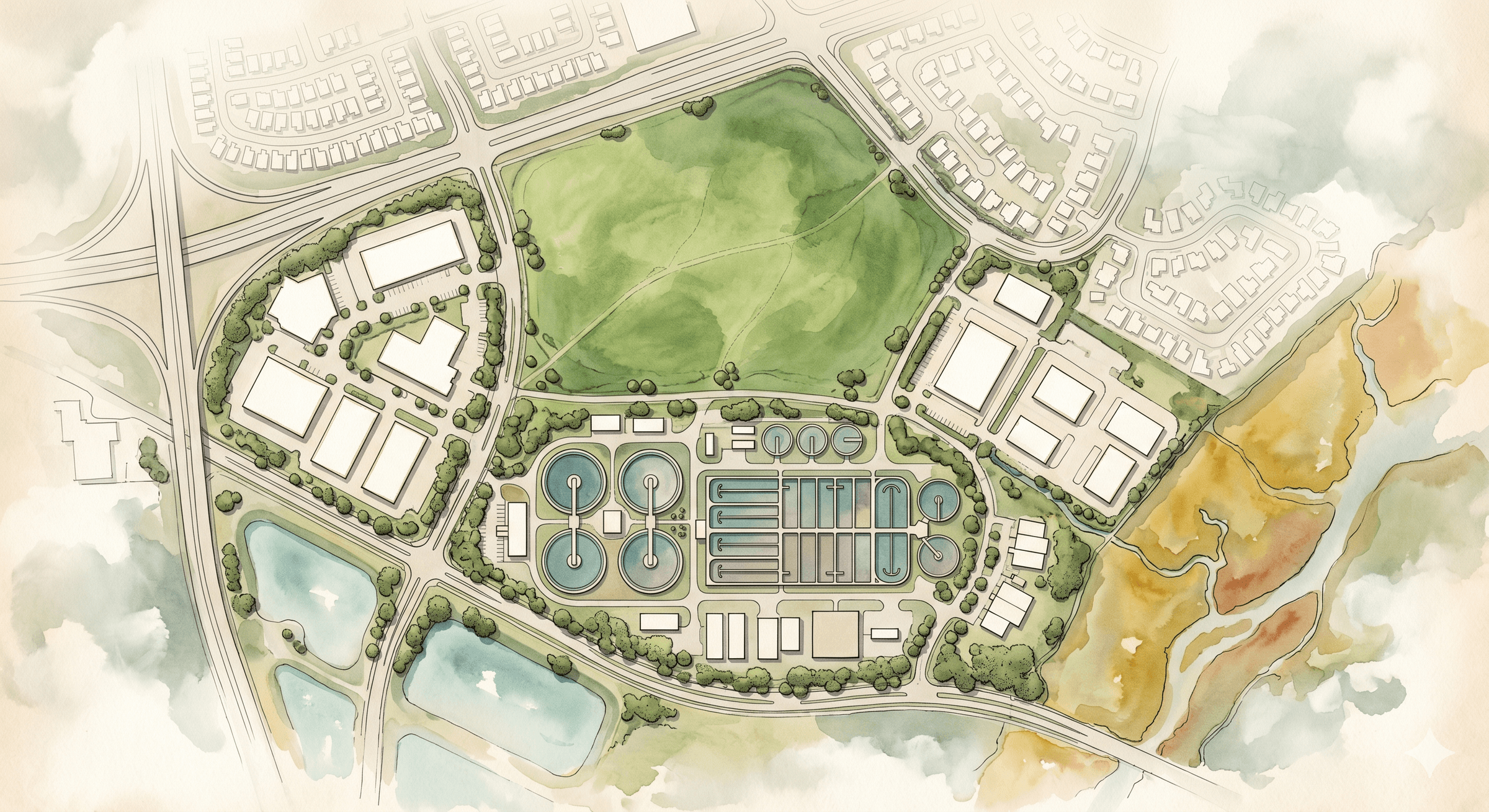
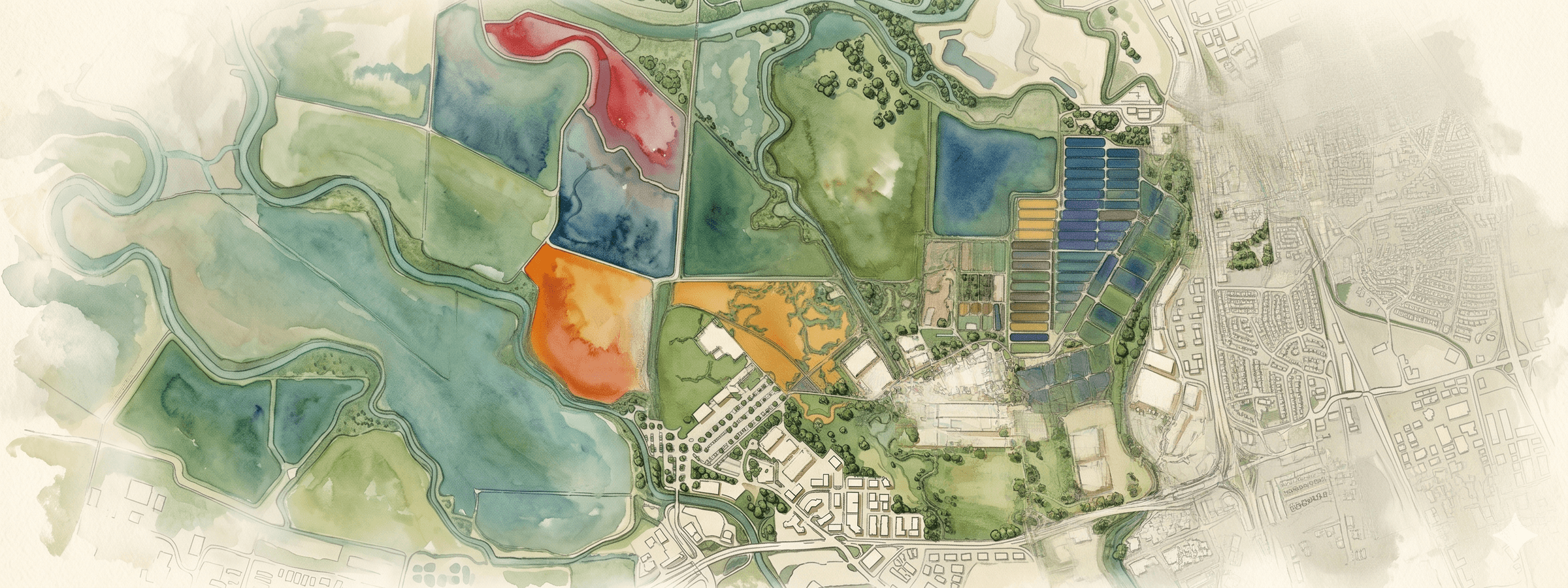
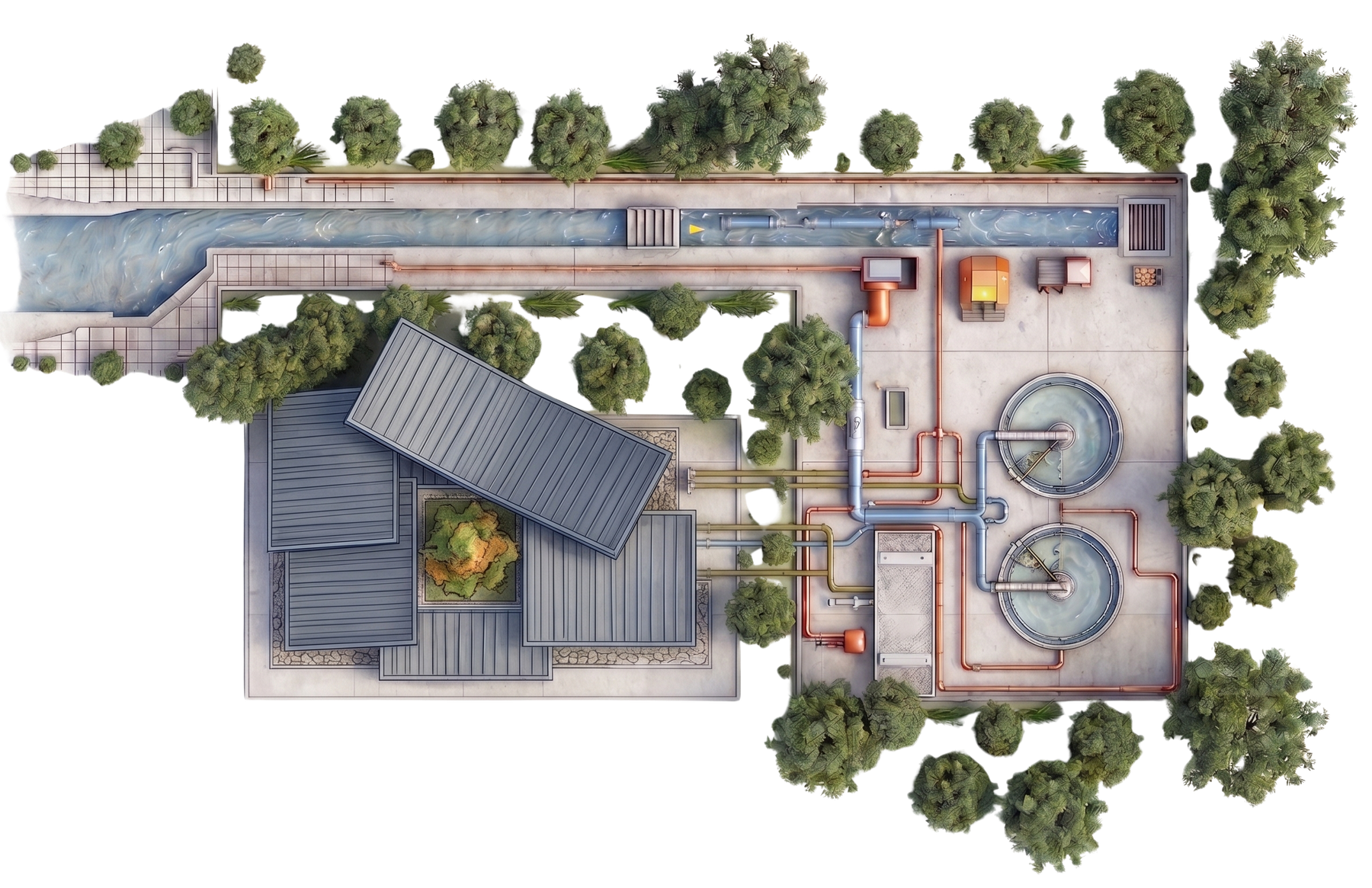
Aerial site plan, San José–Santa Clara Regional Wastewater Facility DIAGRAM · Sankey Biogas energy flow at the post-ADFU plant: cogen consumption, digester thermal duty, MHP HFR duty, and surplus available for monetisation. img-5-1

Site plan · RWF and surrounding context.

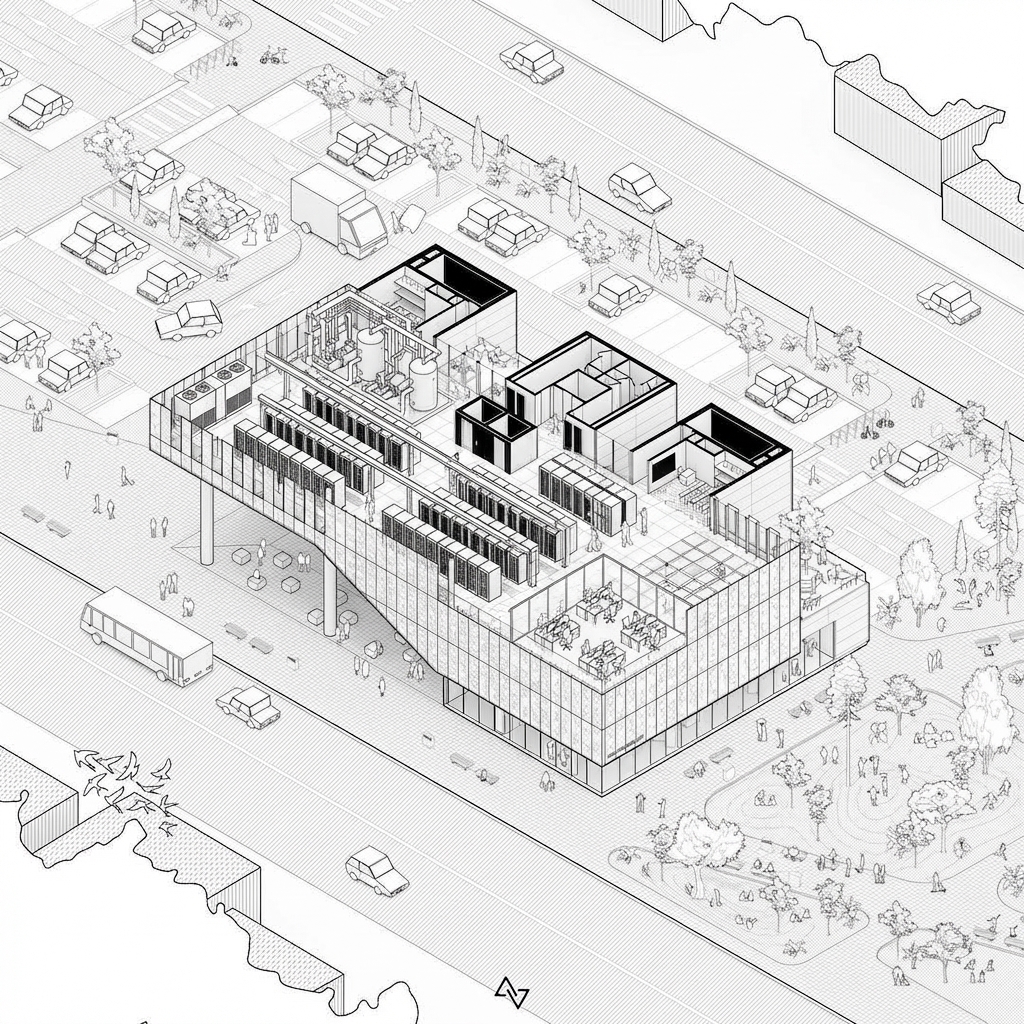
S-section cross-section, integrated facility

Integrated facility section: compute on top, mechanical below, host process beyond.

The integrated facility section illustrates how a MicroLink deployment occupies a compact vertical envelope adjacent to the host process, with the thermal interface running horizontally between them at digester level. The MCFC sits behind the compute envelope, fed by the freed biogas line from the digesters.

Freed value 3 of 4
Design · Freed value

Three pathways for the freed biogas at 2026 California prices

The freed biogas (both the MHP and FOG yield uplift and the cogen displacement that MicroLink enables) has three monetisation pathways. Each has been priced at 2026 California market terms, drawing on CARB LCFS quarterly transfer reports through February 2026, CPUC Decision 24-08-007, the IRS final rule on Section 45V, the OBBBA, and the Jacobs McLeod and Horrax 2022 hydrogen series.

A
Cogen export and behind-the-meter offset
PG&E SRAC · BioMAT Cat 1 · retail offset
$19/MMBtu
range $8–33
Annual at 5–10 MW IT scale
$0.6–4M / year
Recommended
B
RNG injection with LCFS + D3 RIN
PG&E G-BIO interconnection
$20/MMBtu
range $15–25
Annual at 5–10 MW IT scale
$1.5–7M / year
C
Hydrogen via Pathway 5 SMR
Biomethane upgrading + SMR
$30/MMBtu
range $22–60
Annual at 5–10 MW IT scale
$3–18M / year
Range reflects 45V status uncertainty post-OBBBA.

Pathway B is the primary monetisation route at San José. The all-in value reflects 2026 California market conditions: CARB LCFS pathway value at $5–10 per MMBtu (post-2025 LCFS market amendments), federal D3 cellulosic RIN value at $5–10 per MMBtu, gas commodity at PG&E citygate at $3–4 per MMBtu, and avoided distribution charges. PG&E's Schedule G-BIO interconnection programme provides the technical pathway. SB 1440 capital incentives offset interconnection capex up to $3 million for non-dairy WWTPs. WWTP biogas carbon intensity is structurally distinct from deeply-negative-CI feedstocks like dairy or food-scraps RNG; the figures here reflect a realistic +30 to +55 gCO₂e/MJ Tier 2 pathway.

DIAGRAM · LCFS price trend California LCFS credit price, 2024–2026, with diesel benchmark and CNG-equivalent pricing overlaid. img-6-1
Aggregate value · central case

Combined gross value at the post-ADFU plant, with a 6 to 10 megawatt MicroLink IT deployment:

approximately $7 to $16 million per year

Freed-biogas pathways: $5–14M/year. Plus the MCFC tri-generation layer adds ~$1.8M/year of behind-the-meter electricity at avoided-cost rates. This is the prize. The commercial structure between MicroLink and the City (the value share between host and developer) is a separate negotiation. This figure illustrates the magnitude, not the eventual allocation.

Two-track partnership 4 of 4
Design · Partnership

A two-track partnership structure

The partnership is structured to protect each party's interests, to fit the ADFU project's design schedule, and to support MicroLink's ability to raise the capital required for the eventual deployment. It runs on two parallel tracks anchored on a sequenced commitment instrument: Expression of Interest, Letter of Intent, Definitive Agreement.

Track 1

The stub-out and the EOI

A future-ready thermal interface, designed and built by Jacobs as a defined scope addition to the existing $200 million ADFU progressive design-build contract.

Three interfaces
Tap on the mesophilic digester recirculation manifold; parallel branch on the cogeneration jacket-water return loop; tap on the raw sludge feed line.
Sized for
A future 5 to 10 megawatt thermal interface, designed by Jacobs to specification, owned by the City as part of the ADFU asset.
Funded by
MicroLink at approximately $1 million, contributed to the City under a Cost-Sharing Agreement structured through San José Charter §1217 (developer carve-out) layered on a Government Code §4217 finding (energy-services framework).
First commitment
A short-form Expression of Interest signed within 30 days, scoped to authorise inclusion of the stub-out concept in the ADFU design-basis discussion. Three EOIs together (City of San José, NVIDIA, Jacobs) anchor the equity raise that funds the stub-out and the eventual deployment.
Track 2

The LOI and the Definitive Agreement

Within 90 days of EOI signature, both parties commit to a full Letter of Intent. Within 9 months, the Definitive Agreement is signed.

Letter of Intent
Captures the technical specification, the commercial framework principles, and the timeline for Definitive Agreement negotiation.
Definitive Agreement
Land licence or lease for the future MicroLink facility on the freed footprint; thermal services agreement; biogas monetisation framework; operational protocols, performance standards, and dispute resolution; right of first negotiation for MicroLink on thermal interface use post-commissioning; information rights on plant operating data; performance milestones and termination provisions.
Trigger
The Definitive Agreement triggers escrow release on the stub-out funding. ADFU stub-out construction proceeds in base scope. MicroLink construction begins, with the modular first-deployment structure operational in the 2028–2029 window.
DIAGRAM · Escrow flow Escrow mechanics: EOI signed (Day 30) → LOI signed (Day 90) → Definitive Agreement signed (Day 270) → escrow releases on the stub-out funding. Capital protected on either path. img-8-1
The trigger

The two tracks are connected by a single trigger structure. The $1 million stub-out funding is held in escrow against execution of the Expression of Interest and releases on signature of the Definitive Agreement. If the Definitive Agreement does not sign, for any reason, the stub-out is value-engineered out of ADFU at no cost to the City, and the escrow returns to MicroLink.

This protects MicroLink's capital, gives the City a structured commitment, gives Jacobs a clean engineering scope, and creates a sequenced set of signed instruments (EOI, then LOI) that supports MicroLink's fundraising.

Eventual deployment scale
Eventual deployment capex$80–120 million
Stub-out contribution$1 million (~1%)
Term of host paymentsTBD in DA

MicroLink team: Nick Searra, CEO & Co-Founder · Sancha Olivier, Design, Site Inspection & Review · Shane Pather, CTO · David Hassler, Sales & Customer · Andrew Thomas, CCO · Deniz Akgul, Capital & Investment Advisor.

The site, and the technology approach.

Seattle aerial watercolour, University of Washington campus and Lake Washington
03 · Technology approach

Combining existing technologies.
Each option assessed for benefit and cost.

Sewer heat recovery hardware, conveyance integration, and the MicroLink three-loop architecture.

MicroLink's Seattle pilot submission to King County's Sewer Heat Recovery program brings together established sewer heat recovery hardware, established conveyance integration methods, and MicroLink's three-loop thermal architecture. The combination is the innovation. Each component is proven.

Options under combination
Option · SHARC Energy
SHARC WET-class extraction

Vancouver-based, deployed at Seattle reference

Vancouver-based SHARC Energy operates the closest reference to a King County deployment with the Alexandria Real Estate project in Seattle. Proven at municipal interface. Direct extraction from the conveyance line via filtration and shell-and-tube heat exchanger. King County program documents reference SHARC as one of two vendor exemplars.

Benefit: proven at WTD interface. Cost: proprietary system, vendor lock-in.

Option · Huber SE
Huber ThermWin in-pipe

German-engineered in-pipe extraction

German-engineered in-pipe heat exchanger. Lower extraction temperatures, no diversion required, proven across European municipal deployments. King County program documents name Huber alongside SHARC as the second vendor exemplar.

Benefit: no flow diversion, lower civil cost. Cost: lower delta-T per metre.

Option · Pipe wall extraction
Pipe wall extraction approach

Conveyance integration method

Heat extraction at the conveyance pipe wall, upstream of the treatment plant. Applies to interceptor-class pipes. King County WTD's published Sewer Heat Recovery Standard Design Guidelines define the connection requirements. Department of Ecology diversion plan acceptance is a parallel requirement.

Benefit: site flexibility, multiple basin options. Cost: 30/60/90 percent engineering review cycle, $0.005 per ton-hour Energy Transfer Fee, CPI-U Seattle-Tacoma-Bellevue escalator.

Option · MicroLink three-loop
MicroLink three-loop thermal

Server reject heat into the King County interface

Server reject heat injected into a sealed secondary loop, exchanged through the King County Energy Transfer Station, with a dedicated rejection path for thermal balancing. Target PUE 1.12, target ERE below 0.5. Same architecture deployed across the MicroLink portfolio, adapted to King County's WTD interface specifications.

Benefit: portable across host basins. Cost: secondary loop capex, dry cooler footprint.

03 · Regulatory pathway

King County Wastewater Treatment Division process.

Pre-application conference, statement of intent, 30, 60, 90 percent engineering review, Department of Ecology diversion plan, Connection approval, Approved Final Design. Submission currently in preparation.

The Sewer Heat Recovery program operates under the King County Council-approved template Agreement for Sale and Use of Thermal Energy from King County Wastewater. Energy Transfer Fee at $0.005 per ton-hour, annual escalation by CPI-U Seattle-Tacoma-Bellevue, 30-year maximum term. Up to three years of fee waiver available in exchange for data sharing under section 9.2.

03 · Thermal source positioning

Why Seattle, why now.

Seattle's hydropower base, the King County Sewer Heat Recovery program's mature regulatory framework, and the University of Washington's active steam-to-hot-water conversion combine into a deployment context unmatched in any other US city.

King County

The Sewer Heat Recovery pilot program was established in 2020 with three pilot slots. Alexandria Real Estate operates the commissioned reference. MicroLink is positioned as a technology-combined applicant, bringing established extraction hardware together with the MicroLink three-loop thermal architecture and a public-sector deployment model.

University of Washington

David Woodson's Energy Renewal Plan calls for Power Plant electrification and a campus-wide steam-to-hot-water conversion. The new hot water loop is actively seeking low-grade heat sources. MicroLink server reject heat at 40 to 50 °C is a direct match. The conversation with Campus Energy, Utilities, and Operations is ongoing.

Aerial sunset over the bay

A hydropower base, a working regulatory framework, and an active customer. This is why Seattle, why now.

05 · What's ahead

Two tracks, currently moving.

The Seattle program is structured as two parallel tracks. The King County Sewer Heat Recovery pilot submission is in active preparation. The University of Washington Energy Renewal Plan conversation is ongoing. Both can scale, and a third and fourth partner may join later.

Track 01 · Municipal

King County submission, in preparation

MicroLink's application to King County's Sewer Heat Recovery pilot program is currently being prepared for submission. Pre-application conference targeted, full feasibility memo and 30 percent engineering package in scope. Combining SHARC or Huber extraction hardware with MicroLink three-loop thermal architecture, on King County WTD's published regulatory pathway.

Lead
Drew Thompson + Alejandro Davila-Miranda · King County WTD
Track 02 · University

UW conversation, continuing

The University of Washington is converting from steam to hot water district heating across its Seattle campus. The Energy Renewal Plan explicitly seeks low-grade heat sources. MicroLink server reject heat at 40 to 50 °C is a direct match for the new hot water loop. Conversation with Campus Energy, Utilities, and Operations is ongoing.

Lead
David Woodson · UW Campus Energy
What's queued

Two further partners are under early discussion and may be brought into the program in subsequent phases.

"Every city has a wastewater plant. Every wastewater plant needs heat. Every data center makes heat. First Light is the proof that the equation closes."

MicroLink Data Centers · April 2026

A1 · Questions

Five questions
we keep asking

Not a questionnaire. A way of opening a conversation that continues from here. These are the questions MicroLink keeps thinking about: the ones where another perspective would change how we think. Rank what resonates, add a note, or both.

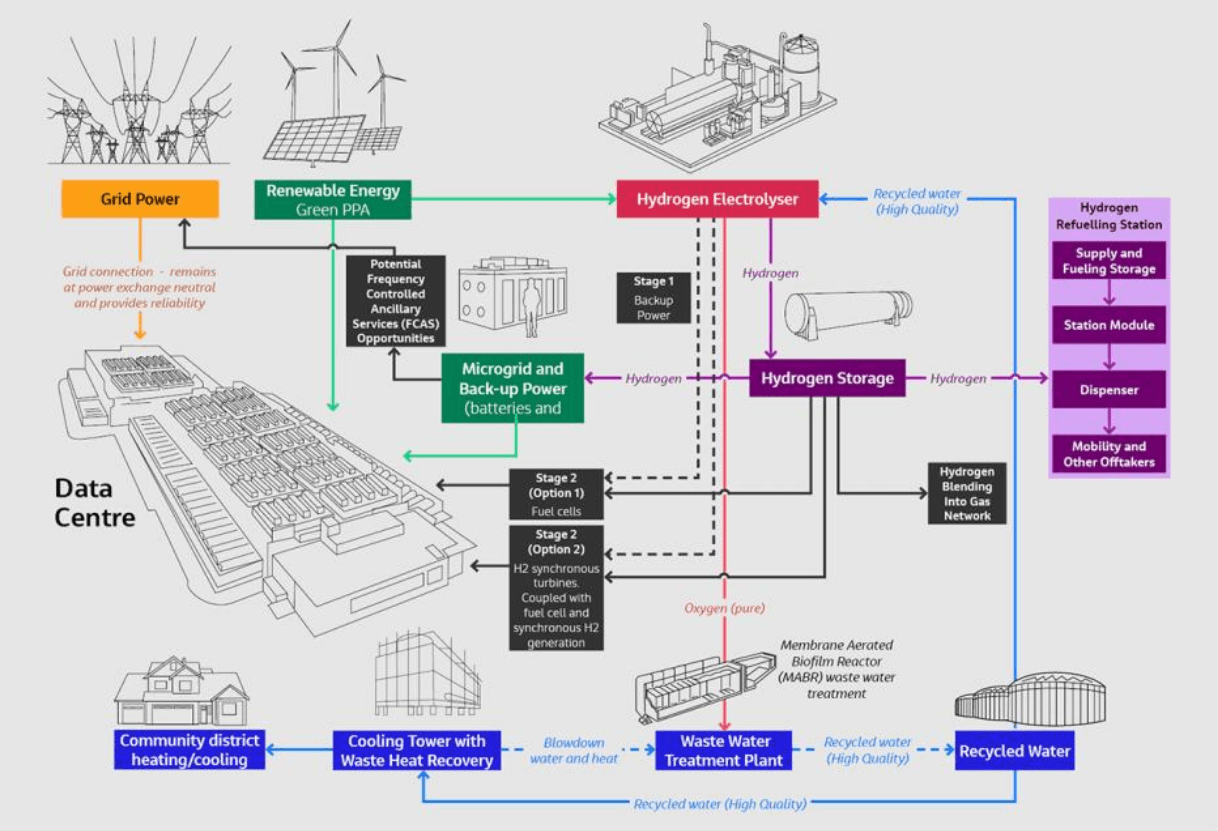
Aerial schematic: data center top-left, three-loop thermal interface, wastewater treatment plant on the right.
Three MicroLink modules. One thermal story.
01
On the next decade

Where will sovereign and municipal AI infrastructure look most different five to ten years out?

The genuine inflection points are usually visible before they become consensus. We want to know which of these moves the most, and which one will move first.

Rank the top three0 of 3
0 / 1500
Submitted. 0 people have shared their view on this so far.
02
On the compute and host boundary

Where does the seam between compute and industrial process go next?

Integration is happening at thermal, electrical, control, and commercial layers, each one a separate negotiation today. We want to know where the deepest unlock sits, and what's blocking it from becoming the default in industry reference designs.

Rank the top three0 of 3
0 / 1500
Submitted. 0 people have shared their view on this so far.
03
On the public-sector path

Where is the path forward for public-sector AI infrastructure that isn't built for hyperscalers?

State, municipal, and non-federal public buyers don't fit cleanly into the major reference programmes today, which are built for hyperscalers and federal-scale sovereigns. The demand is real, the gap is real, and deployments are happening anyway. We want to know what unlocks a recognised path.

Rank the top three0 of 3
0 / 1500
Submitted. 0 people have shared their view on this so far.
04
On heat as a first-class output

What would make heat recovery a default specification rather than a project-by-project negotiation?

Server heat into industrial process is standard in district heating across Northern Europe and is becoming standard in our deployments. We want to know what would tip it from edge case to expected default.

Rank the top three0 of 3
0 / 1500
Submitted. 0 people have shared their view on this so far.
05
On San José

What is the question this site should answer first?

San José is one site, one set of conditions, and a chance to learn things that scale to other public-sector deployments. From the design-review seat, what should the site most settle?

Rank the top three0 of 3
0 / 1500
Submitted. 0 people have shared their view on this so far.
A2 · LIBRARY

The collection of MicroLink Briefings.

Domain knowledge we accumulate as we work with partners. Each briefing is a working document.
WRRF REFERENCE · V1 · APRIL 2026 COMPLETE

Wastewater treatment, a working reference.

A briefing on wastewater treatment processes: anaerobic digestion, MHP, thermal hydrolysis, cogeneration, biogas pathways, and how MicroLink integrates with them. Originated from a technical conversation with Maddy Fairley-Wax (Jacobs Solutions).

Open briefing →
NCP ARCHITECTURE · IN DEVELOPMENT OPEN INVITATION

The 1 MW pod, in detail.

Quantum-X800 + AC SU at 576 GPUs, three-loop thermal architecture, diesel-free 2N power topology. The reference architecture for the canonical pod is being written with NVIDIA, so the document reads as a joint template that other deployments can adopt.

Build it with us
SOVEREIGN MUNICIPAL AI · IN DEVELOPMENT OPEN INVITATION

The product, end to end.

Confidential Computing on Hopper / Blackwell, BlueField-3 multi-tenant isolation, Run:ai per-tenant clusters, Llama-Nemotron sovereign fine-tuning. The stack is being co-authored with NVIDIA's product and public-sector teams, so the document reads the way both organisations would describe it.

Build it with us
More briefings to follow, added as the work continues.
A2 · References

Glossary, sources, and citations

Technical terminology used throughout this working document, followed by the primary, regulatory, and industry sources behind the figures and claims.

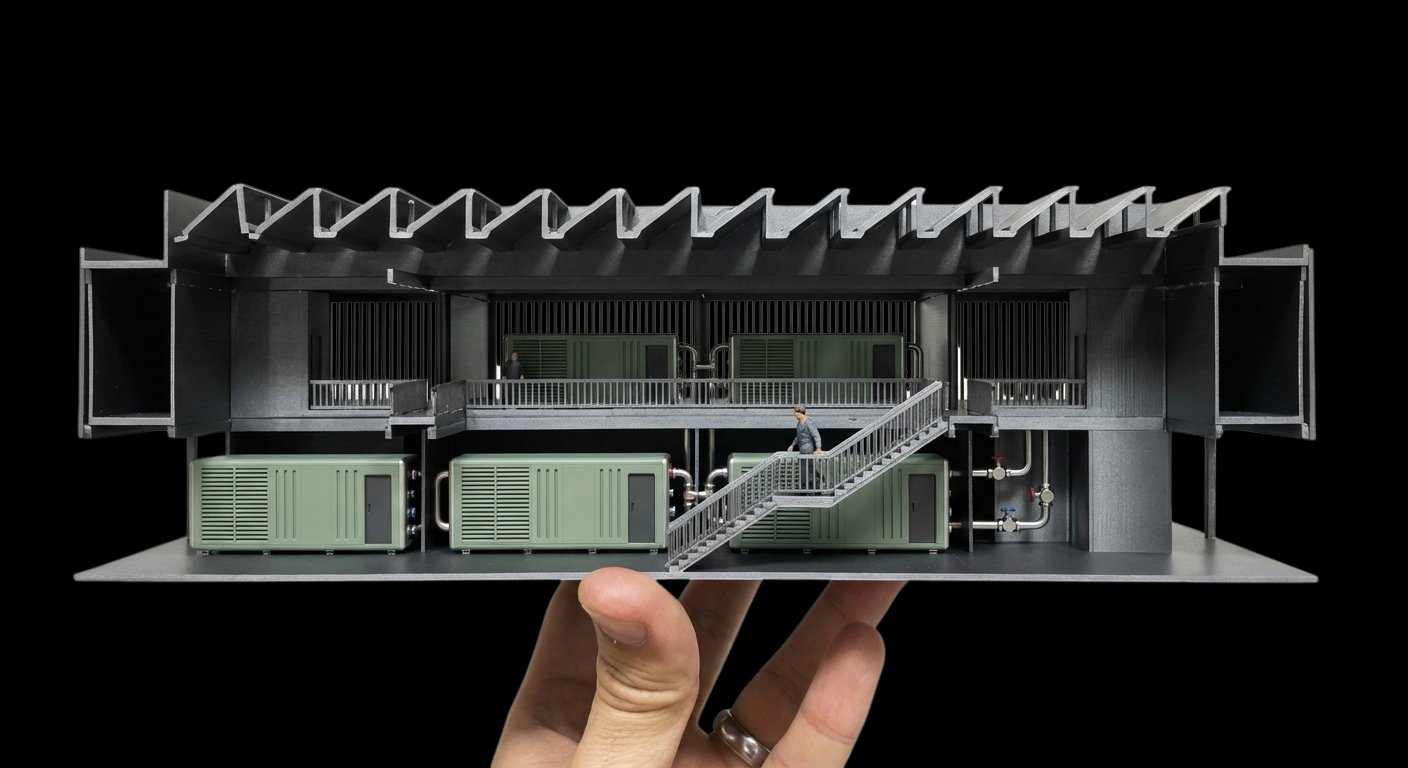
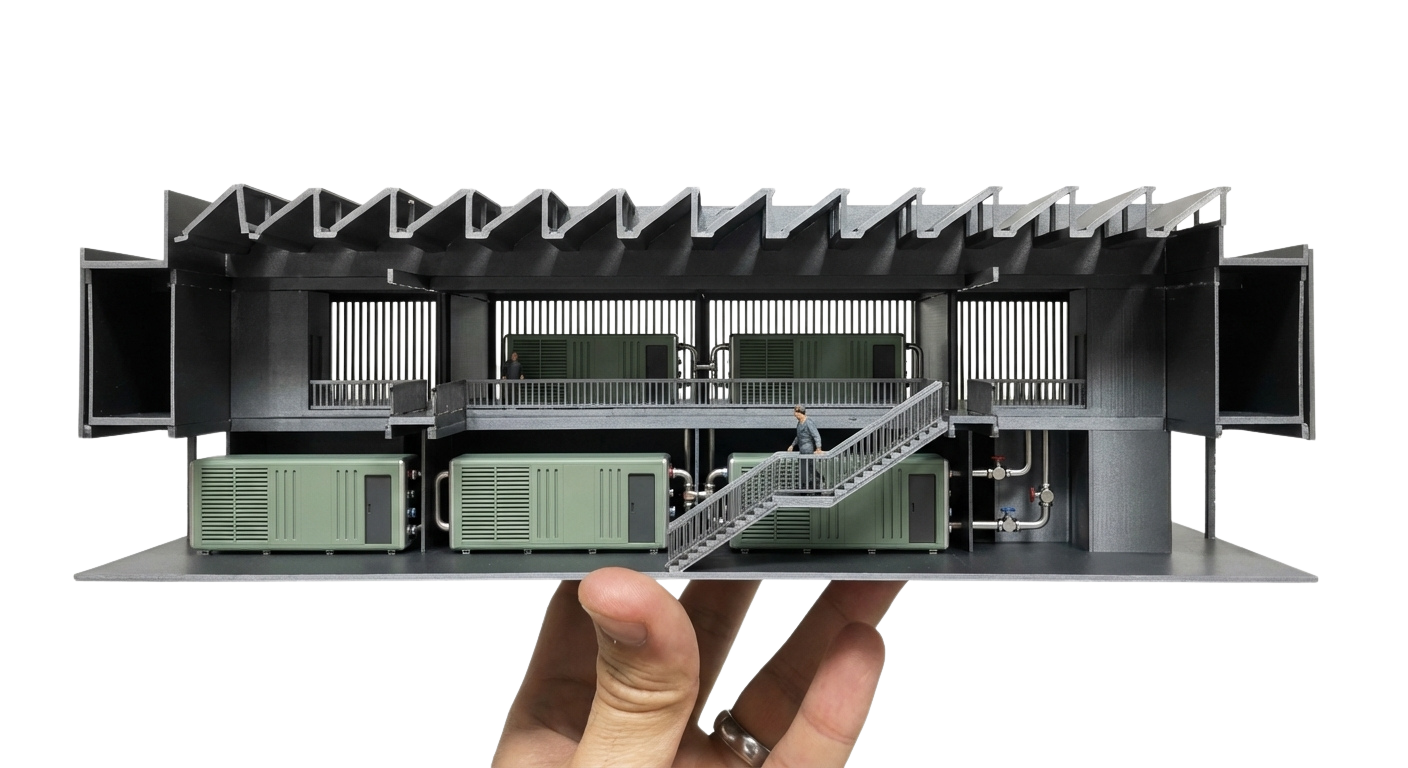
Physical scale model of a MicroLink two-container compute module, shown in section to reveal internal layout
Glossary
ADFU
Additional Digester Facility Upgrades; the $200 million Jacobs progressive design-build contract awarded by the City of San José in January 2026.
CDU
Coolant Distribution Unit; isolates the chip-side fluid loop from the facility loop and provides redundant pumping.
CI
Carbon intensity, expressed in grams of CO₂-equivalent per megajoule, used by CARB LCFS.
CIN / TAN / SMN
The three Ethernet/InfiniBand fabrics in the NCP architecture: cluster interconnect, tenant access, and secure management.
D3 RIN
Federal cellulosic Renewable Identification Number under the EPA Renewable Fuel Standard, Pathway Q for RNG dispensed as transportation CNG.
DA
Definitive Agreement; the substantive partnership contract concluding the EOI → LOI → DA sequence.
DTC
Direct-to-Chip liquid cooling; cold plate mounted directly on the GPU/CPU package.
EOI
Expression of Interest; the short-form first-commitment instrument signed at Day 30, scoped to authorise inclusion of the stub-out concept in the ADFU design-basis discussion.
GMP
Guaranteed Maximum Price; the second-phase commercial structure of the ADFU progressive design-build contract.
HFR
Hydrolysis Fermentation Reactor; the 75 °C sidestream vessel in the Jacobs MHP three-vessel architecture.
HRT
Hydraulic Retention Time; reactor volume divided by daily volumetric feed.
LCFS
Low Carbon Fuel Standard; California's transportation fuel decarbonisation programme administered by CARB.
LOI
Letter of Intent; the second-stage commitment instrument signed at Day 90, capturing the technical specification and commercial framework principles.
MCFC
Molten Carbonate Fuel Cell; produces electricity, recoverable heat, and hydrogen from biogas at ~47% electrical efficiency.
MHP
Microbial Hydrolysis Process; Jacobs' proprietary biological hydrolysis process at 75 °C using Caldicellulosiruptor bescii.
MMBtu
Million British thermal units; standard unit of energy commerce in US gas markets.
NCP
NVIDIA Cloud Partner; NVIDIA's reference architecture and partner programme for AI compute facilities.
NVL72
NVIDIA's 72-GPU rack-scale unit (Blackwell GB200 and successor GB300 Vera Rubin); the atomic compute unit of an NCP facility.
PUE
Power Usage Effectiveness; the ratio of total facility energy to IT equipment energy in a data center.
RNG
Renewable Natural Gas; biogas upgraded to pipeline-quality natural gas for injection into utility distribution.
RWF
Regional Wastewater Facility; the San José–Santa Clara plant.
TPAD
Temperature-Phased Anaerobic Digestion; the staged thermophilic-then-mesophilic digester train at San José.
TPAC
Treatment Plant Advisory Committee; the City of San José advisory body overseeing the RWF.
VSR
Volatile Solids Reduction; percentage of organic solids destroyed during digestion.
WRRF
Water Resource Recovery Facility; the contemporary term for a wastewater treatment plant operating with resource-recovery functions.
Sources and citations
Primary sources & regulatory documents
  • City of San José Council Item 26-02813 January 2026 · ADFU contract authorisation.
  • City of San José Capital Improvement ProgramAdditional Digester Facility Upgrade project page.
  • City of San José Climate Adaptation & Resilience PlanMarch 2026 (Provenzano).
  • US Patent 12,359,225Microbial Hydrolysis Process (Jacobs).
  • BAAQMD Title V Permit A0778RWF combined air permits.
  • CARB LCFS Reporting ToolQ3 2025 transfer reports.
  • EPA Clean Watersheds Needs Survey 202217,544 publicly owned treatment works.
  • EPA Opportunities for CHP at WWTPs2011 update; plant-size distribution and AD subset.
  • IRS final rule · Section 45VOne Big Beautiful Bill Act, July 2025.
  • CPUC Decision 24-08-007Avoided Cost Calculator.
  • Keyser Marston Addendum No. 2June 2025 · RFQ structure for up to 99-year leases on the freed footprint.
Industry sources & technical literature
  • Jacobs press release · 21 January 2026ADFU contract award.
  • Egeland 2023Driving Sustainability in Data Centers, Jacobs white paper.
  • McLeod & Horrax 2022Hydrogen from Wastewater, Jacobs six-part series.
  • Fairley-Wax, Parry, Nielsen · WEFTEC 2024Application of the Microbial Hydrolysis Process on an Existing Anaerobic Digestion System.
  • Jacobs 2025 StrategyChallenge Accepted.
  • Smart Water MagazineADFU coverage, January 2026.
  • ENR Top 500 Design FirmsWastewater rankings, FY2024.
  • Argus MediaLCFS pricing analysis, 2025.
  • IETA · September 2025California Low Carbon Fuel Standard brief.
  • Bioenergy NewsVVWRA SB 1440 first contract, March 2026.